Budget does not have to mean bad. Here is where to save, where not to, and which specs actually change what the tool can do.
⚡ The Short Answer
For most homeowners, an 18V or 20V cordless drill/driver with two speed settings and a clutch is all you need. That covers flat-pack furniture, shelves, decking, fence panels and almost every household job.
Where budget genuinely matters: buy a drill that comes with a battery and charger if you own no cordless tools, and prioritise a known brand’s entry model over an unknown brand’s flagship. The battery platform outlives the drill.
What you can skip: brushless motors, hammer function and high torque figures are genuinely useful for heavy or frequent work — and largely irrelevant if you drill a few holes a month.
Cordless drills are the tool almost everyone buys first, and the market is deliberately confusing. The same brand will sell you a drill at four different prices with specifications that look similar on the box.
The good news is that a modest drill from an established brand does everything a typical homeowner needs, and does it for years. The trap is buying an unknown brand’s impressive-sounding numbers, or buying a bare tool and discovering the battery costs more than the drill did.
Specs That Actually Matter
- Battery platform. The most important decision, and it is not really about the drill. Your batteries will fit every future tool on that platform, so pick a brand with a range you might grow into.
- Two speed settings. Low speed for driving screws with control and torque; high speed for drilling. A single-speed drill is a genuine limitation.
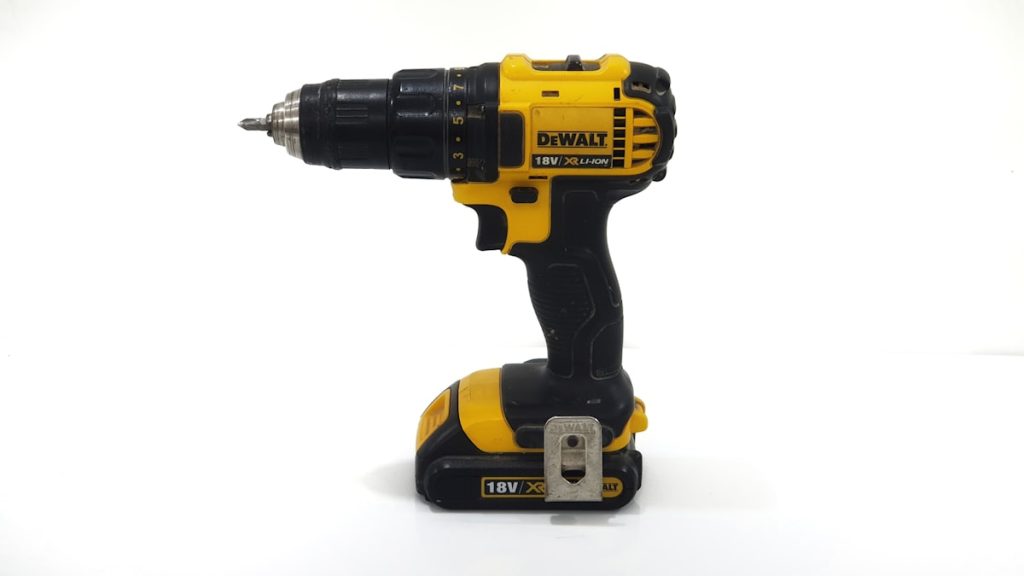
- An adjustable clutch. The numbered collar behind the chuck. It stops the drill driving screws too deep and stripping them. This is the feature that makes a drill pleasant to use.
- Chuck size. A 1/2 inch chuck accepts larger bits than a 3/8 inch one. For general use, 1/2 inch is worth having.
- Weight and balance. You will hold this overhead and in awkward positions. A lighter drill you actually reach for beats a powerful one that tires you.
- Battery capacity (Ah). Higher capacity runs longer between charges. For occasional use a small pack is fine; for a day of decking, get a bigger one.
What You Can Safely Ignore
Marketing pushes several specifications hard that make little difference to typical household use.
- Very high torque figures. Impressive on the box, rarely the limiting factor when hanging a shelf. Torque matters when driving large fixings into dense timber all day.
- Brushless motors — genuinely more efficient and longer-lasting, but the benefit shows up under heavy, frequent use. For occasional jobs, a brushed motor lasts a very long time.
- Hammer function, unless you regularly drill masonry. For occasional wall plugs in brick, a hammer drill helps; for wood and plasterboard it is irrelevant. See our hammer drill guide if masonry is a regular job.
- Very high voltage numbers. 12V, 18V and 20V MAX describe different rating conventions rather than a straightforward power ladder. An 18V and a 20V MAX tool are broadly comparable.
- Huge accessory kits. A hundred cheap drill bits is worth less than a dozen good ones.
🔩 The honest summary: for household use, a two-speed drill with a clutch from a brand you recognise, supplied with a battery and charger, is enough. Everything above that is buying capability you may never use.
Kit vs Bare Tool — The Real Cost
This catches people out constantly, and it is where an apparent bargain becomes expensive.
“Tool only” or “bare tool” means exactly that — no battery, no charger. The price looks excellent next to a kit, and for someone who already owns batteries on that platform it genuinely is. For someone starting from nothing, adding a battery and charger separately usually costs more than buying the kit in the first place.
A kit includes at least one battery and a charger, and often a case. For a first cordless tool this is almost always the right purchase.
The practical rules:
- First cordless tool? Buy a kit. Always.
- Already own batteries on that platform? Buy bare and save substantially.
- Two batteries beats one big one for real work — charge one while using the other.
- Check the battery is a current type and not an obsolete format that will be hard to replace.
- Combo kits can be excellent value if you genuinely need both tools.
Our Picks
DEWALT 20V MAX Cordless Drill Driver Set, 2-Speed
Best First Drill★★★★★ 4.8 out of 5 — the sensible starting point
This hits the specification that matters for household work without paying for capability you will not use. It is a two-speed drill driver with a high-performance motor delivering 300 unit watts out, and the compact, lightweight design genuinely matters when you are working inside a cabinet or above your head. Supplied as a set, so you are not hunting for a battery afterwards.
- ✅ Two speeds — control for driving, pace for drilling
- ✅ Compact body fits into cabinets, joists and awkward corners
- ✅ Comes with a battery — no hidden extra purchase
- ✅ 20V MAX platform is one of the widest tool ranges available
- ⚠️ Brushed motor — fine for household use, less suited to daily trade work
- ⚠️ Best for: homeowners, first cordless tool, general DIY
Price and availability change often — the button shows the live Amazon price.
DEWALT 20V MAX Cordless Drill and Impact Driver Combo Kit
Best Value Pair★★★★★ 4.7 out of 5 — two tools, one battery platform
If you will be driving a lot of screws — decking, fencing, framing, flat-pack — this is the better buy. The drill handles holes; the impact driver drives screws far faster and with less strain on your wrist. Both are compact and lightweight, designed to work in tight spots, and they share batteries.
- ✅ Impact driver transforms screw driving — faster, easier, far less wrist strain
- ✅ Shared batteries across both tools
- ✅ Better value than buying the two separately
- ✅ Compact designs for tight areas
- ⚠️ Impact drivers are loud and not suited to delicate work
- ⚠️ Best for: decking, fencing, flat-pack, anyone driving many screws
Price and availability change often — the button shows the live Amazon price.
Comparison
| Option | Includes | Rating | Best for |
|---|---|---|---|
| DEWALT drill driver set | Drill + battery | 4.8 | First drill, general household use |
| DEWALT drill + impact combo | Two tools + batteries | 4.7 | Lots of screw driving, better value |
| DEWALT XR brushless hammer drill | Tool only | 4.6 | Masonry and heavy use, existing battery owners |
💬 Affiliate disclosure: as an Amazon Associate, DetailSanderGuide may earn from qualifying purchases. This costs you nothing extra and never changes which tools we recommend.
Drill or Drill + Impact Driver?
A question worth answering properly, because the impact driver is the tool most people do not know they need.
A drill/driver rotates smoothly and has a clutch, so it drills holes cleanly and drives screws with controlled torque. It is the versatile one.
An impact driver adds rapid rotational hammering when it meets resistance. That delivers far more driving force in short bursts, without transmitting the twist to your wrist. It drives long screws into dense timber effortlessly where a drill would stall, cam out, or wrench your arm.
| Job | Better tool |
|---|---|
| Drilling holes in wood or metal | Drill |
| Driving long screws into timber | ✅ Impact driver |
| Decking, fencing, framing | ✅ Impact driver |
| Delicate work, small screws | Drill (clutch control) |
| Flat-pack furniture | Drill on a low clutch setting |
| Masonry | Hammer drill |
If your work is mostly a few holes and small screws, a drill alone is plenty. If you are building anything with a lot of fixings, the combo kit pays for itself in wrist comfort alone.
Getting More From a Budget Drill
Technique and accessories close most of the gap between a cheap drill and an expensive one.
- Buy good bits. This is the single biggest upgrade. A sharp, well-made drill bit in a modest drill outperforms a blunt bargain bit in a premium one. Bits are consumables — replace them when they stop cutting.
- Use the clutch. Start low and increase until screws seat flush without stripping. Most people leave it on the drill symbol permanently and wonder why they wreck screw heads.
- Match speed to the job. Low gear for driving and large bits, high gear for small holes in wood. Running high speed with a big bit stalls the motor and cooks it.
- Pilot holes. They prevent splitting, make driving far easier and stop screws snapping. On hardwood they are not optional.
- Let the bit cut. Steady moderate pressure. Leaning on a drill overheats the bit and the motor without drilling faster.
- Clear the swarf. On deep holes, withdraw the bit periodically to clear waste and let it cool.
- Keep batteries healthy. Do not store them fully flat, avoid extreme temperatures, and let a hot pack cool before charging.
✅ Spend the saving on bits, not on the drill. A budget drill with a quality set of twist bits, spade bits and driver bits will out-perform an expensive drill with the cheap bits that came in the case.
Common Mistakes
1. Buying a bare tool as your first cordless purchase
Result: paying more overall once you add battery and charger.
Fix: buy a kit unless you already own batteries on that platform.
2. Chasing torque numbers
Result: paying for capability that never gets used.
Fix: prioritise two speeds, a clutch and a battery platform you can grow into.
3. Never using the clutch
Result: stripped screw heads and screws driven straight through the workpiece.
Fix: set it low, test on scrap, increase until screws seat flush.
4. Using a drill on masonry without hammer function
Result: a hot bit, a shiny dimple in the brick and no hole.
Fix: use a hammer drill and masonry bits for brick and concrete.
5. Buying an unknown brand for the specs
Result: impressive numbers, poor battery life and no spares in two years.
Fix: an established brand’s entry model is usually the better buy.
6. Skipping pilot holes in hardwood
Result: split timber and snapped screws.
Fix: drill a pilot slightly smaller than the screw’s core diameter.
Real-World Examples
The deck that needed an impact driver
Someone starts a decking project with a drill/driver alone and finds that after a hundred screws their wrist aches, the driver bit keeps camming out of the screw heads, and the drill occasionally twists in their hands when a screw bites. An impact driver eliminates all three problems — it delivers driving force in rotational bursts rather than as continuous twist. For any project with a lot of fixings, it is transformative.
The bargain drill that was not
An unknown-brand drill with headline torque figures at a fraction of the price of a known brand. It works initially, then the battery capacity drops sharply within a year, and no replacement packs are available. The tool becomes scrap. An established brand’s cheapest model would have cost more up front and still be working.
The blunt bit blamed on the drill
A common frustration: “my drill isn’t powerful enough to get through this.” Nine times out of ten the bit is blunt, the wrong type for the material, or being run at the wrong speed. Fitting a fresh, correct bit usually resolves what looked like a power problem.
Drill Bits: Where Your Money Is Best Spent
Almost every complaint about a drill lacking power traces back to the bit rather than the tool. Matching the bit to the material matters more than any specification on the drill.
| Bit type | Use for | Notes |
|---|---|---|
| Twist (HSS) | Wood, metal, plastic | The general-purpose bit. Titanium coatings extend life in metal |
| Brad point | Wood only | Centre spur stops wandering and gives clean-edged holes |
| Spade / flat | Large holes in wood | Cheap and fast, rougher exit hole |
| Forstner | Flat-bottomed and overlapping holes | Cleanest holes in wood; best used in a drill press |
| Hole saw | Large diameter holes | Pipework, cable runs, door hardware |
| Masonry | Brick, block, concrete | Needs hammer action to work properly |
Buy a decent set of twist bits and brad points first. Those two cover the vast majority of household drilling. Add spade or Forstner bits when a project needs large holes, and masonry bits only if you drill walls.
Look after them. Bits blunt from heat, and heat comes from pressure and speed. Run large bits slowly, ease off the pressure, and back out of deep holes periodically to clear waste and let things cool. A bit that turns blue has been overheated and will never cut properly again.
Battery Care That Extends Life
- Do not store packs fully discharged. A battery left flat for months may never recover full capacity.
- Avoid temperature extremes. A freezing garage in winter and a hot car in summer both shorten pack life considerably.
- Let hot batteries cool before charging. Charging a pack straight after heavy use stresses the cells.
- Use the tool rather than leaving it. Lithium packs age whether used or not, so a battery bought and left unused for years is not preserved.
- Keep the contacts clean. Sawdust in the terminals causes intermittent connection that looks like a failing battery.
- Buy the second battery early. Rotating two packs means neither gets deeply discharged as often, and you never stop work waiting for a charge.
Corded Drills: Still Worth Considering?
Cordless has taken over so completely that corded drills barely get mentioned, but there are still cases where one makes sense.
Corded advantages: constant power that never fades mid-job, no batteries to buy or replace, significantly cheaper for the same capability, and no runtime limit on long tasks like mixing plaster or drilling many large holes.
Corded drawbacks: a cable to trip over and unplug, no use where there is no power, and considerably less convenient for quick jobs around a house.
Where a corded drill still wins: as a dedicated bench or workshop drill, for heavy continuous work like paddle mixing, and as a very cheap backup that never has a flat battery. Plenty of workshops keep an old corded drill purely for the jobs that would drain a battery quickly.
For a general household tool, cordless is the right answer for almost everyone — the convenience genuinely matters and modern batteries are good. But if your budget is very tight and the drill will live in a workshop near a socket, a corded model gives more capability per pound spent.
Frequently Asked Questions
What should I look for in a budget cordless drill?
Two speed settings, an adjustable clutch, a 1/2 inch chuck, and — crucially — a battery and charger included if this is your first cordless tool. Beyond that, choose an established brand whose battery platform has tools you might buy later, because those batteries will outlive the drill. High torque figures, brushless motors and hammer functions are genuinely useful for heavy or frequent work but rarely change what a homeowner can accomplish.
Is a brushless drill worth the extra money?
For frequent or heavy use, yes — brushless motors run cooler, last longer and get more work from each battery charge. For occasional household jobs, a brushed motor will last many years and the price difference is better spent on good drill bits or a second battery. The honest test is how often you will use it: weekly, go brushless; a few times a month, do not bother.
Do I need a hammer drill?
Only if you drill masonry — brick, block or concrete. A hammer drill adds a percussive action that lets the bit chip through hard material. For wood, plasterboard, metal and general household work it makes no difference. If you occasionally need a wall plug in brick, a hammer drill is useful; if you never touch masonry, spend the money elsewhere.
12V or 18V/20V?
12V tools are lighter and more compact, which is genuinely nice for cabinet work, furniture assembly and overhead jobs. 18V and 20V MAX tools have more power and much wider tool ranges on their platforms. For a single general-purpose drill, 18V or 20V MAX is the more versatile choice. Note that 18V and 20V MAX describe the same class of battery under different rating conventions — one is not meaningfully more powerful than the other.
How long should a cordless drill battery last?
A lithium battery typically gives several years of normal use before capacity noticeably drops, though this depends heavily on storage and charging habits. Avoid storing packs fully discharged, keep them out of freezing or very hot conditions, and let a hot battery cool before charging. When runtime falls off sharply, a replacement pack usually costs far less than a new drill — provided you bought a platform that is still current.
Buying Checklist
- Decided on a battery platform you might grow into
- Kit with battery and charger chosen if this is your first cordless tool
- Two speed settings confirmed
- Adjustable clutch present
- Chuck size checked — 1/2 inch is more versatile
- Weight and balance considered for overhead work
- Second battery budgeted if doing a large project
- Good quality drill and driver bits bought separately
- Impact driver considered if driving many screws
- Hammer function only if masonry is a regular job
Final Thoughts
A budget cordless drill from a reputable brand will handle almost everything a household throws at it for years. The mistakes that cost money are buying a bare tool without realising, chasing specifications you will never use, and pairing a decent drill with terrible bits.
Get a two-speed kit with a battery included, add an impact driver if you drive a lot of screws, and spend the difference on bits.
🔧 What to read next: drilling masonry regularly? See our cordless hammer drill guide. For precision holes at a bench, a floor drill press is the upgrade.