If you already own Ryobi ONE+ tools, the maths on their orbital sander changes completely. Here is the honest assessment.
⚡ The Short Answer
The Ryobi 18V ONE+ 5″ random orbit sander makes most sense if you already own ONE+ batteries. On that platform it is genuinely good value — no cord, on-board dust collection, and a 5″ pad that takes the cheapest and most available abrasive discs on the market.
If you own no Ryobi tools, the calculation is different. Buying into a battery platform for one sander rarely makes sense — a corded sander gives more sustained power for less money.
Where it sits: this is a solid DIY and homeowner tool, not a trade one. For weekly professional use, the Makita and DEWALT options have stronger track records.
Ryobi occupies a specific place in the tool market, and understanding it makes the buying decision much easier. Their ONE+ range is built around one battery that fits a very large number of tools — drills, saws, blowers, sanders, inflators, lights and dozens more.
That is the actual product. The individual tools are competent rather than exceptional, but the value comes from the fact that your fifth ONE+ tool costs far less than your first, because you already have the batteries.
This guide covers where the sander is genuinely good, where it falls short, and how to decide based on what is already in your garage.
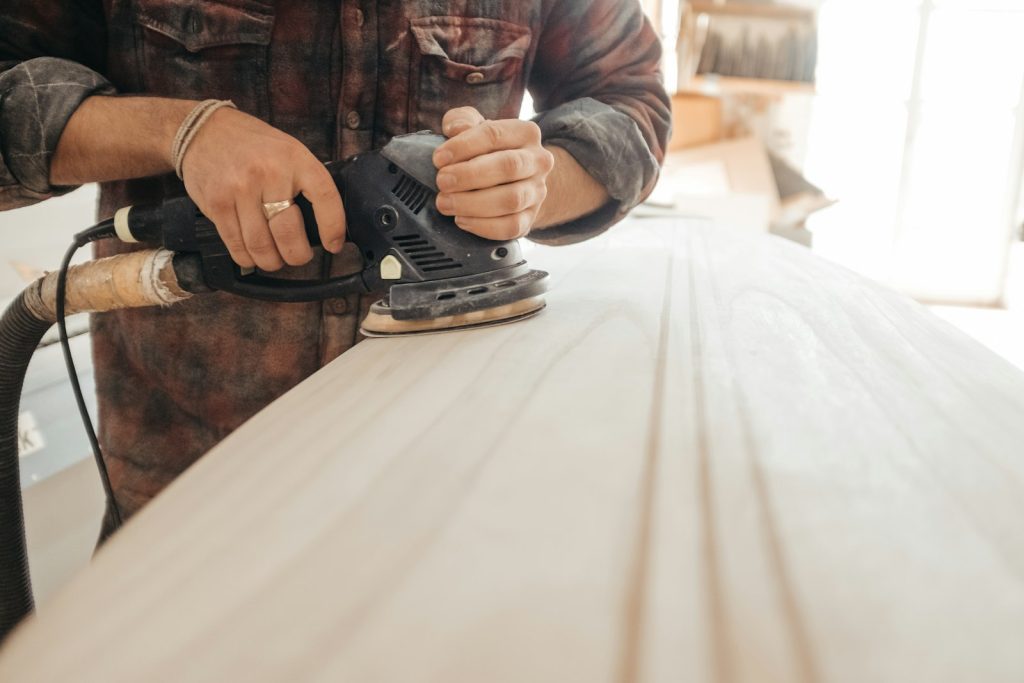
The ONE+ Platform Question
Before comparing specifications, answer one question: do you already own Ryobi ONE+ batteries?
If yes, this sander is likely the best value option available to you. Buying the bare tool costs a fraction of a complete kit from another brand, you get cordless convenience, and the battery you already own does the work.
If no, think carefully. Buying into any battery platform means committing to that ecosystem. For a single sander, a corded tool from an established brand usually gives you more sustained power for less money, and it never runs out mid-project.
The exception is if you plan to buy more cordless tools. If a drill, a circular saw and a blower are also on your list, then the platform decision matters more than the sander itself — and ONE+ has one of the widest tool ranges available at consumer prices.
🔋 The honest framing: you are not really choosing a sander. You are choosing a battery platform, and the sander comes along with it.
What the Sander Actually Offers
Two features stand out on the ONE+ 5″ random orbit sander, and both are practical rather than headline specs.
- On-board dust collection. A dust bag or canister attached to the tool. It is genuinely useful for keeping the work surface visible, though as with every on-board system, connecting a vacuum works considerably better if you can.
- Multiple grip zones. Sounds like marketing, and is actually meaningful on a sander. You hold these tools differently depending on whether you are working flat on a bench, vertically on a door, or overhead — and being able to shift grip comfortably matters over an hour.
- 5-inch hook-and-loop pad. The most important practical detail. 5″ discs are the cheapest and most widely stocked abrasive size, in every grit, in every hardware store.
- Random orbit action. The pad spins and orbits, so the scratch pattern is random and leaves no visible swirls — essential before stain or varnish.
- Cordless. No cable to drag across a freshly sanded surface or catch on a table leg.
What it does not have is variable speed on the level of premium models, or the sustained power of a corded tool. For homeowner and DIY work that is rarely the limiting factor; for all-day professional use it would be.
The Model
RYOBI 18V ONE+ 5″ Random Orbit Sander
Best on the ONE+ Platform★★★★☆ 4.5 out of 5 — strong DIY choice
A cordless 5″ random orbit sander on the ONE+ battery platform. The on-board dust collection keeps the work surface visible, and the multiple grip zones genuinely help when you switch between flat, vertical and overhead work. The 5″ hook-and-loop pad takes the most common and cheapest discs available.
- ✅ Fits the whole ONE+ range — the battery you own already powers it
- ✅ No cord to drag over freshly sanded surfaces
- ✅ 5″ discs are the cheapest and most available abrasive size
- ✅ On-board dust collection keeps the line visible while you work
- ⚠️ Less sustained power than a corded sander on long sessions
- ⚠️ Only makes financial sense if you own or plan to own ONE+ batteries
- ⚠️ Best for: homeowners and DIYers already on the Ryobi platform
Price and availability change often — the button shows the live Amazon price.
How It Compares
| Model | Power | Speed | Rating | Pick it when |
|---|---|---|---|---|
| RYOBI 18V ONE+ | 18V battery | — | 4.5 | You already own ONE+ batteries |
| DEWALT DWE6423 | Corded 3A | 8,000–12,000 OPM | 4.7 | You want variable speed and constant power |
| Makita BO5030K | Corded 3A | 12,000 OPM | 4.8 | Simple, reliable, best rated |
| Makita XOB01Z | 18V LXT | 7,000–11,000 OPM | 4.8 | Cordless on the Makita platform |
| PORTER-CABLE 20V MAX | 20V battery | 12,000 OPM | 4.6 | Cordless on the Porter-Cable platform |
Notice the pattern: the cordless options are all platform decisions. Pick the one matching batteries you already own, or go corded.
💬 Affiliate disclosure: as an Amazon Associate, DetailSanderGuide may earn from qualifying purchases. This costs you nothing extra and never changes which tools we recommend.
Cordless vs Corded for Sanding
Sanding is a better use case for cordless than most people expect, and a worse one than others.
Where cordless genuinely wins: you reposition constantly when sanding. Around a table, along a door, up a staircase, over a piece of garden furniture. A cord catches on corners, drags across the surface you just finished, and needs unplugging every time you move rooms. Removing it is a real quality-of-life improvement.
Where corded wins: sustained power over long sessions. Sanders draw current continuously rather than in bursts like a drill, so they are among the more demanding cordless tools. On a full day of sanding you will swap batteries repeatedly, whereas a corded sander simply keeps going at full power from the first minute to the last.
The practical split: for jobs measured in minutes to an hour — a chair, a shelf, a door, touching up trim — cordless is more pleasant. For jobs measured in half-days — a whole floor, a large table, a full room of trim — corded is less frustrating.
Battery Life and What to Expect
Runtime depends on battery capacity, grit, material and how hard you press, so specific figures are misleading. What is reliable is the pattern:
- Higher capacity batteries make a large difference. A 4Ah or 5Ah pack roughly doubles or triples the runtime of a small 1.5Ah one. For sanding specifically, the bigger pack is worth it.
- Pressing down drains the battery faster as well as producing a worse finish. The motor works harder to maintain the orbit under load.
- Fresh discs extend runtime. A clogged disc means more pressure, which means more current draw. Changing abrasive promptly helps the battery as well as the finish.
- Two batteries beat one big one for continuous work — sand on one while the other charges.
- Cold weather reduces capacity. Sanding in an unheated garage in winter gives noticeably shorter runtimes.
✅ If you buy one accessory, make it a larger battery. The difference between a small pack and a 4Ah+ pack on a sander is far more noticeable than on a drill, because sanders draw continuously rather than in short bursts.
Who Should Buy It
It is a good fit if you:
- Already own Ryobi ONE+ batteries and tools
- Do DIY and home projects rather than trade work
- Value cordless convenience over maximum sustained power
- Work in short-to-medium sessions rather than full days
- Are building out a single battery platform deliberately
Look elsewhere if you:
- Own no Ryobi tools and only need one sander — buy corded
- Are on a different battery platform already — buy that brand’s sander instead
- Sand for hours at a time regularly
- Want variable speed for veneer and finish work — the DEWALT DWE6423 is the better pick
- Need trade-grade durability
Getting Good Results
- Let the tool float. The weight of the sander is the correct pressure. Pressing slows the orbit — which brings back the swirl marks a random orbit sander exists to avoid — and drains the battery faster.
- Keep the pad flat. Tipping onto an edge concentrates all the cutting into a small area and gouges. This is the most common cause of dips on a tabletop.
- Move slowly. Roughly an inch per second, overlapping each pass by about half the pad width.
- Never pause in one spot. A stationary pad dishes the surface.
- Step through grits. 80 for stripping, 120 for smoothing, 180 for softwood before finish, 220 for hardwood before stain.
- Do not sand past 220 before staining. Finer grits burnish the surface closed and cause blotchy colour.
- Vacuum between grits so a stray coarse particle does not drag a scratch across a nearly finished surface.
- Finish by hand with the grain at your final grit on visible surfaces.

Common Mistakes
1. Buying into a platform for one tool
Result: paying for batteries and a charger you did not need.
Fix: if this is your only cordless tool, buy a corded sander instead.
2. Using a small battery for a big job
Result: constant interruptions and a half-sanded table.
Fix: a 4Ah or larger pack, or two batteries in rotation.
3. Pressing down
Result: swirl marks, shorter runtime, clogged discs.
Fix: let it float and change to a coarser grit if it is too slow.
4. Relying on the on-board bag alone
Result: discs clog quickly and the finish suffers.
Fix: connect a vacuum when you can — it roughly doubles disc life.
5. Sanding too fine before stain
Result: patchy, washed-out colour.
Fix: stop at 180 on softwood, 220 on hardwood.
6. Expecting it to strip a deck
Result: hours of work, many discs, several batteries.
Fix: use a belt sander for heavy removal, then this for finishing.
Real-World Examples
The garden furniture that finally got done
A set of teak chairs and a table, sanded outdoors well away from any socket. This is exactly where a cordless sander earns its place — no extension lead trailing across a lawn, no unplugging every time you move around the piece. The job takes a couple of battery swaps, which is a fair trade for the convenience.
The buyer who should have bought corded
Someone with no Ryobi tools buys the sander plus a battery and charger to refinish one dining table. The total spend is more than a well-rated corded sander, and the corded one would have had more sustained power. The platform only pays off if you keep adding tools to it.
The staircase where the cord was the problem
Sanding stair treads and spindles with a corded sander means constantly repositioning a cable on steps, which is both awkward and a trip hazard. Cordless removes the problem entirely, and stair work is short-burst sanding that suits battery power well.
Understanding the Battery Platform Trap
Battery platforms are designed to make your next purchase easy and your switch expensive. That is not sinister — it is simply how the economics work — but it is worth understanding before you commit.
How it works in practice: the first tool you buy on a platform costs the most, because you are paying for the battery and charger. Every tool after that can be bought bare, often for a fraction of the kitted price. By your fourth or fifth tool, the platform has saved you a considerable amount.
The flip side is that switching later means either buying new batteries or running two incompatible systems. People who own three ONE+ tools and then buy a Makita sander end up with two chargers, two battery types, and a drawer of packs that only fit half their tools.
Practical guidance:
- Pick a platform based on the tools you will own in three years, not the one you are buying today. Look at the full range, not just the sander.
- Ryobi ONE+ is one of the broadest consumer ranges available, which is its genuine strength — everything from sanders to inflators to lawn tools runs on the same pack.
- Trade platforms cost more per tool but generally offer more durable tools and better warranty support. Which matters depends on how hard you use them.
- Do not mix platforms casually. If you already own batteries, that brand’s version of a tool is usually the right buy even if a rival’s is slightly better on paper.
For a sander specifically, this matters more than for most tools, because sanders are battery-hungry. Being on a platform where you already own two or three large packs makes cordless sanding genuinely practical rather than an exercise in swapping batteries.
Accessories Worth Having
- A second battery. The single most useful addition. Sand on one, charge the other, and the tool never stops mid-project.
- A vacuum adapter. On-board collection is convenient, but connecting a shop vacuum roughly doubles disc life and dramatically improves finish quality by keeping the abrasive clear.
- Bulk disc packs. Buy 80, 120, 180 and 220 together. Running out of one grit halfway through is the main reason people rush a finish.
- A replacement backing pad. The hook-and-loop surface wears out long before the tool does. When discs start flying off, that is the pad rather than the sander.
- Mesh abrasive discs. More expensive per disc, but they clog far less on resinous timber and let dust pass straight through to extraction.
- An interface pad. A soft foam layer between pad and disc lets the abrasive follow gentle contours instead of flattening them — useful on shaped furniture edges.
None of these are essential to get started, but the second battery and the vacuum adapter change the experience of using a cordless sander more than any specification on the box.
Storage and Battery Care
Lithium batteries last longest when they are treated reasonably, and a few habits meaningfully extend their working life.
- Do not store packs fully flat. Leaving a battery completely discharged for months is the fastest way to kill it. Top it up before it goes in a drawer for winter.
- Avoid extreme temperatures. An unheated garage in deep winter or a hot car in summer both shorten pack life. Bring batteries indoors if conditions are severe.
- Let a hot pack cool before charging. Charging immediately after heavy sanding puts the cells under additional stress.
- Keep the terminals clean. Sanding dust is fine enough to work into the battery contacts and cause intermittent connection.
- Store the sander pad-up or in a case. Leaving it face down on a dusty bench presses grit into the hook-and-loop and wears it prematurely.
Frequently Asked Questions
Is the Ryobi orbital sander any good?
For DIY and homeowner use, yes — it is a competent 5″ random orbit sander with on-board dust collection and comfortable grip options. The value depends almost entirely on whether you already own Ryobi ONE+ batteries. On that platform it is excellent value. Bought standalone with batteries and charger, a corded sander from Makita or DEWALT usually gives more power for less money. It is not a trade tool, but it does not claim to be.
Should I buy cordless or corded for sanding?
Cordless suits short and medium jobs where you move around a lot — furniture, stairs, doors, garden pieces — because no cable catches or drags across your work. Corded suits long sessions like whole floors or full rooms of trim, since sanders draw current continuously and will get through batteries quickly. If you can only have one and you do occasional big jobs, corded is the safer choice.
What size discs does it use?
5-inch hook-and-loop discs, which is the most common and most widely stocked abrasive size available. That is a genuine practical advantage — you will find them in every grit, in bulk packs, at competitive prices, in any hardware store. Check the hole pattern matches your pad if you want dust extraction to work properly.
How long does the battery last when sanding?
It varies with battery capacity, grit, material and pressure, so exact figures mislead. The reliable guidance is that sanders are more demanding than drills because they draw continuously rather than in bursts, so a larger 4Ah or 5Ah pack makes a substantial difference. Pressing down and using clogged discs both shorten runtime noticeably — letting the tool float and changing discs promptly helps the battery as well as the finish.
Ryobi or DEWALT for a random orbit sander?
Decide on batteries first. If you already own Ryobi ONE+ packs, the Ryobi is the better value by a wide margin. If you own DEWALT 20V packs, buy DEWALT. If you own neither, the corded DEWALT DWE6423 is the stronger tool — variable speed from 8,000 to 12,000 OPM, a counterweight that reduces vibration, and constant power with no runtime limit.
Checklist
- Confirmed whether you already own ONE+ batteries
- Considered a corded sander if this is your only cordless tool
- Larger 4Ah+ battery chosen for sanding sessions
- 5″ hook-and-loop discs stocked in 80, 120, 180 and 220
- Disc hole pattern matches the pad for dust extraction
- Vacuum connected where possible rather than the bag alone
- Tool allowed to float — no downward pressure
- Pad kept flat, never tipped onto an edge
- Passes overlapped by half the pad, about an inch per second
- Vacuumed between every grit change
- Stopped at 180 softwood / 220 hardwood before stain
- Finished by hand along the grain on visible surfaces
Final Thoughts
The Ryobi ONE+ sander is a good tool wrapped in a platform decision. On its own merits it is a capable DIY sander with useful dust collection and comfortable handling. In context, it is the sander you should buy if — and largely only if — you already have ONE+ batteries in the garage.
If you do, it is hard to beat on value. If you do not, buy corded and spend the difference on abrasive.
🔧 What to read next: compare the wider category in dual action sanders for woodworking, and see sanders for furniture for project-specific advice. Plan grits with the grit progression planner.